
Responsible procurement practices
Sustainable Supply Chain Management Goal
Primax, under the authorization of the Board of Directors, established the ESG Office within the Office of the Chairman. The highest leader, the Chairman, authorized Vice President Chiang, Yan-Ying to serve as Chief Sustainability Officer. Responsible supply chain management projects are jointly advanced by both the social and environmental working groups, in close collaboration with procurement functions. Primax places strong emphasis on building procurement personnel's capacity to practice responsible sourcing. Starting in 2023, ESG-related training has been required for procurement and supplier ESG management personnel.

Types of Supply Chain and Disruption Risk Control Suppliers' Profiles
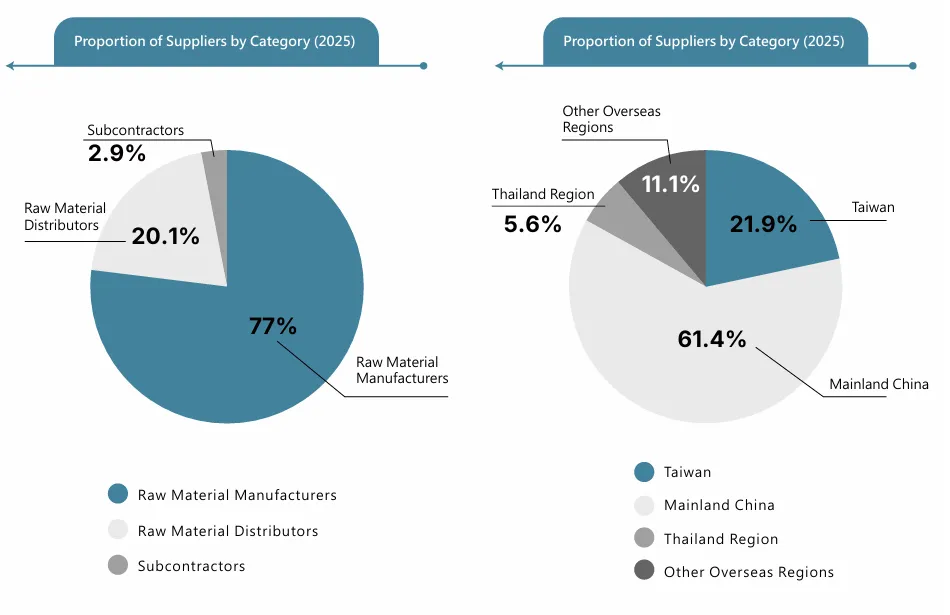
Primax Group's products are primarily designed for use with desktop computers, notebook computers, tablets, and mobile phones. The product portfolio includes keyboards, mice, keyboard modules, touchpad modules, high-speed docking stations, gaming devices, creator peripherals, and wireless charging solutions, with keyboards and mice being the main sales drivers. The supply chain covers a wide range of raw materials, including ICs, printed circuit boards, electronic components, plastic parts, metal parts, and packaging materials. Primax collaborates with 2,052 raw material suppliers worldwide, comprising 1,633 raw material manufacturers, 380 electronic component and raw material distributors, and 39 subcontractors. From a regional perspective, there are 281 suppliers in Taiwan, 1,365 in Mainland China and Hong Kong, 89 in Thailand, and 317 in other overseas locations. In 2025, the total transaction value amounted to approximately NT$42,462 million.
Primax Group promotes localized procurement and short-chain arrangements based on the locations of its manufacturing facilities. For each product line, the Company assesses whether to implement authorized stockpiling and safety stock strategies, taking into account the characteristics of critical components and the lead time required for material preparation. To manage significant materials, short-term measures include internal inventory reallocation mechanisms to address supply disruption risks caused by unforeseeable events. In the long term, Primax has established second-source procurement strategies to diversify the risks associated with reliance on a single supplier, thereby strengthening overall supply chain resilience
In China, the Company's main production base, the proportion of localized procurement has reached 74%, surpassing the internal management target of 65%. At another key production site, the newly established facility in Thailand, the Company is adopting various approaches to progressively increase the proportion of localized procurement each year, as the local supply chain is not yet sufficiently mature to fully support localization.
Conflict minerals management and due diligence
Since 2012, Primax has explicitly complied with the Conflict Minerals Regulation, prohibiting the use and procurement of conflict metals (such as tantalum, tin, gold, and tungsten) sourced from conflict-affected regions of the Democratic Republic of the Congo. The Company requires all suppliers to commit to responsible sourcing of minerals and strives to ensure that minerals used in its products (including tantalum, tin, gold, and tungsten) do not contribute to funding armed conflict. This policy has been incorporated as a mandatory requirement in supplier procurement management and product design. Suppliers utilizing conflict metals are required to disclose smelter information and declare it through the Primax green product management platform, GP-Portal
Furthermore, as the electric vehicle industry has rapidly expanded, the applications of rechargeable batteries have also increased significantly. Accordingly, since 2020, Primax Group has required suppliers to disclose information related to the use of cobalt. Our current disclosure scope covers cobalt refiners and recyclers; facilities engaged solely in the production of battery cathodes, alloys, or ceramics are considered downstream entities and are therefore not classified as refiners.
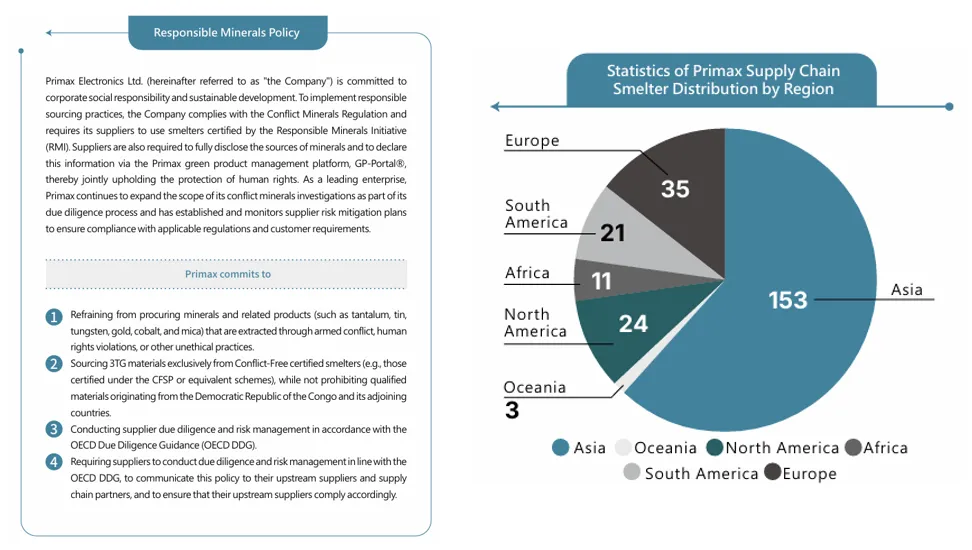
According to statistics on smelter information disclosure within our supply chain in 2025, suppliers declared a total of 247 smelters. Among them, gold accounted for the largest number, with 88 smelters, followed by tin (54), cobalt (39), tantalum (32), tungsten (30), and mica (4). All smelter sources and their countries of distribution, as shown below, are traceable.
In the course of its investigations, Primax references the list of qualified 3TG smelters established by the Responsible Minerals Initiative (RMI) and requires suppliers to use only smelters certified by the RMI. In addition, we regularly cross-check our records against the latest smelter lists to ensure that all materials in use comply with current requirements. In 2025, among the smelters utilized by Primax, 28 were removed from the qualified list due to failing to pass the RMI's audit. In response to this situation, we immediately launched a supply chain investigation and required suppliers to trace the sources of their upstream materials and verify smelter usage status to ensure that no smelters not listed on the qualified list are inadvertently used.
In addition, Primax also adheres to the Organisation for Economic Co-operation and Development's Due Diligence Guidance for Responsible Supply Chains of Minerals from Conflict-Affected and High-Risk Areas, identifying potential risks in the supply chain and conducting risk assessments based on the supply chain policy and due diligence recommendations listed in Annex II. In 2025, a total of 234 suppliers underwent conflict minerals management and due diligence risk identification and assessment, and the investigation results met the qualification standards.
Supplier due diligence
Primax Group practices responsible procurement management and requires suppliers to commit to compliance with applicable local laws and industry codes of conduct to protect the legitimate rights and interests of employees. To further standardize responsible sourcing practices, Primax Group has established the Supplier Code of Conduct. This Code is formulated based on conventions of the International Labour Organization (ILO), the Responsible Business Alliance (RBA), other international labor and human rights conventions, recognized social responsibility management systems (such as ISO 45001 and ISO 14001), and customer requirements regarding labor rights, environmental protection and occupational health and safety, conflict minerals management, and business ethics. It applies to all suppliers of Primax Group and its subsidiaries.
In fulfilling its corporate responsibility for social and environmental management, Primax not only implements internal policies prohibiting child labor and forced labor but also conducts personnel identification during recruitment and periodic internal audits to prevent such practices. The Company strictly requires all selected and managed suppliers to comply with relevant laws and the RBA provisions prohibiting child labor.
Regarding integrity commitments, Primax stipulates that suppliers and their employees must faithfully conduct all commercial transactions, including but not limited to the procurement of materials, project contracting, subcontracted processing, equipment transfer, disposal of obsolete materials, transportation and customs clearance, labor dispatch, and outsourcing arrangements. Should any active or passive conduct occur that undermines procurement discipline, suppliers and relevant stakeholders are required to immediately report such matters to the following designated Primax Group contact point, via letter or e-mail, using their real name and providing contact details, along with accurate information or supporting evidence. Primax will notify relevant internal departments to evaluate and respond to any received correspondence or messages, while maintaining open communication and positive engagement. Suppliers and related stakeholders should not be concerned about retaliation or adverse consequences. (Professional Ethics Reporting Mailbox: impeach@primax.com.tw)
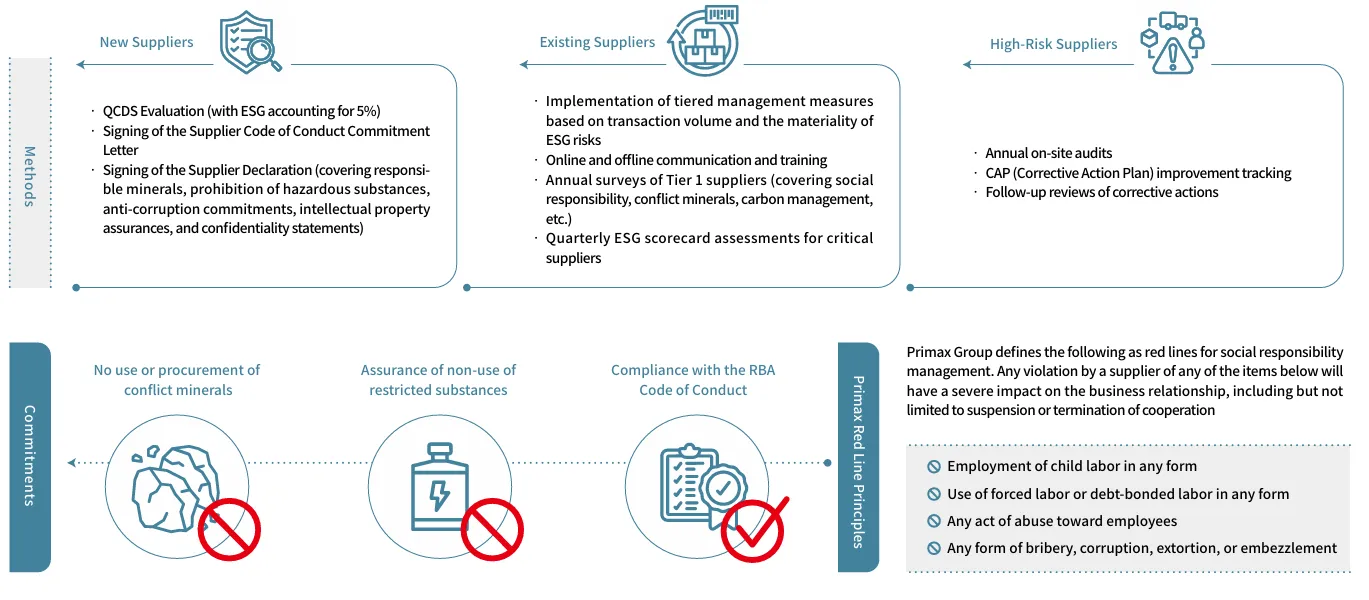
At the end of 2023, Primax issued the first edition of the Supplier Code of Conduct and initiated the supplier signing process. Existing suppliers with transactions in that year and expected to continue cooperation, as well as new suppliers, were required to sign a commitment letter to declare their adherence to the RBA (Responsible Business Alliance) Code of Conduct and related standards. In 2025, Trading Suppliers achieved an 89.2% signing rate of the Supplier Code of Conduct Commitment Letter. In the future, we will continue to enhance the coverage rate of suppliers required to sign through communication and guidance mechanisms, to strengthen the overall sustainability management performance of the supply chain.
Signing the Supplier Code of Conduct Commitment Letter is a mandatory requirement for all new suppliers. All new suppliers must pass evaluations on quality, cost, delivery, service, and ESG performance before they can be qualified as formal suppliers. In 2025, a total of 335 new suppliers were onboarded, all of whom completed the supplier assessment process. Among them, 307 completed the signing of the Supplier Code of Conduct, representing a signing rate of 91.6%. For special suppliers, including dominant international players and customer-designated vendors, environmental and social responsibility declarations are reviewed by Primax through due diligence of their publicly disclosed sustainability reports or equivalent documents. Alternatively, such suppliers may be approved following a comprehensive risk assessment and special authorization by management in order to be included on the Approved Vendor List (AVL).
Supplier Selection and Tiered Management
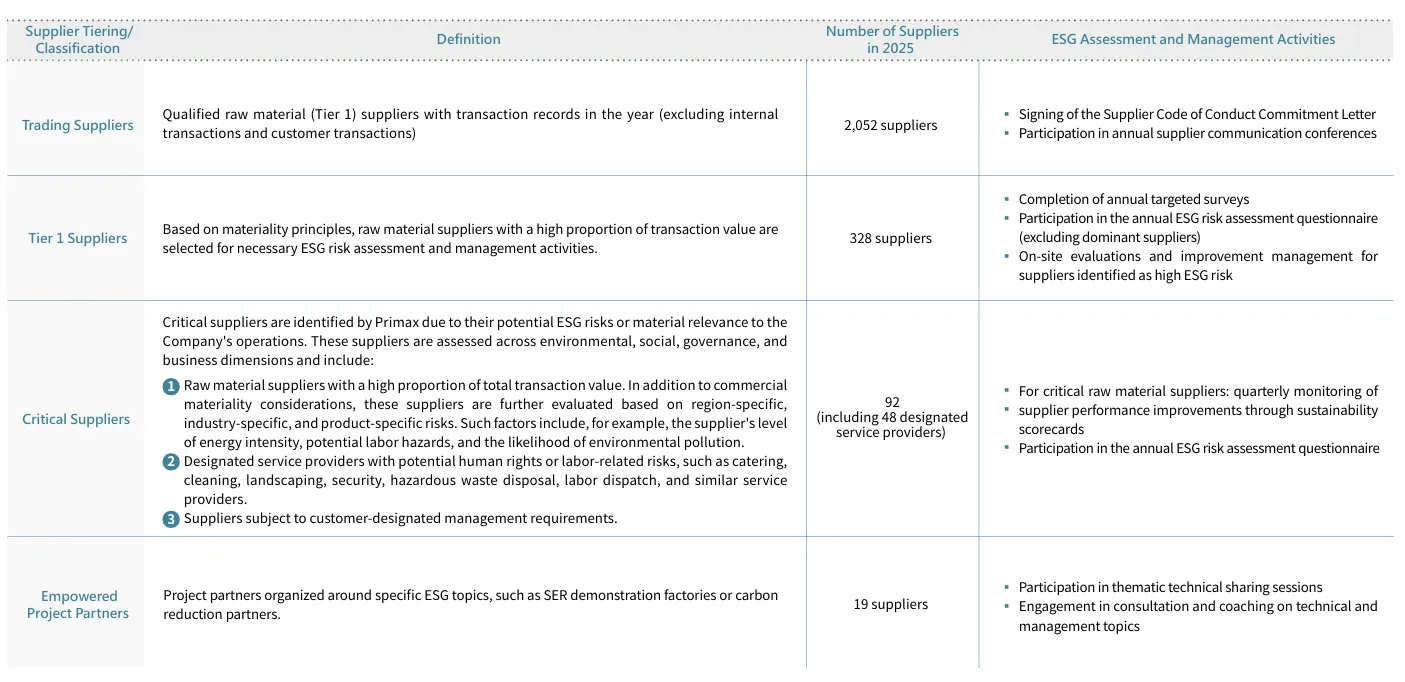
To maximize its influence across the supply chain and focus on advancing various ESG initiatives, Primax categorizes suppliers based on their proportion of transactions and the materiality of their impact across environmental, social, and business collaboration dimensions. For raw material trading suppliers (direct suppliers), the Company further classifies them as "Tier 1 Suppliers," "Critical Suppliers," and "Empowered Project Partners." In addition, designated service providers are also classified as "Critical Suppliers." Primax implements corresponding ESG assessment and management activities tailored to each supplier category. The scope of supplier ESG assessments is primarily defined by the Primax Supplier Code of Conduct. In alignment with international management trends, the Company's ESG strategies, and the materiality of supplier impact, ESG evaluations and development activities for each supplier tier are conducted as illustrated below.
Supplier Risk Identification and Tiered Management
Primax continuously refines its supplier management practices and regularly conducts comprehensive reviews of its supplier management systems to address sustainability risk management requirements. Building on the comprehensive implementation of tiered management measures in 2024, further optimize related operations in 2025 by systematically promoting differentiated ESG management programs across supplier selection, investigation and assessment, communication enhancement, to collaboration management aspects.
At the same time, Primax continues to promote sustainable development initiatives within the supply chain, ensuring that key issues are effectively embedded in supply chain management and gradually strengthening the resilience of the supply chain towards establishing a sustainable supply chain system
ESG Sustainability Scorecard and Supplier Disqualification Mechanism
Primax evaluates the ESG performance of critical raw material suppliers quarterly through a sustainability scorecard and adjusts their current quarterly QCDS comprehensive performance by up to a positive or negative 10% weighting based on their score results. If a supplier's final comprehensive performance rating remains at Grade C (below 60 points) for two consecutive quarters, a process is initiated to suspend new project applications to strengthen supplier management and continuously enhance the overall level of sustainable development in the supply chain.
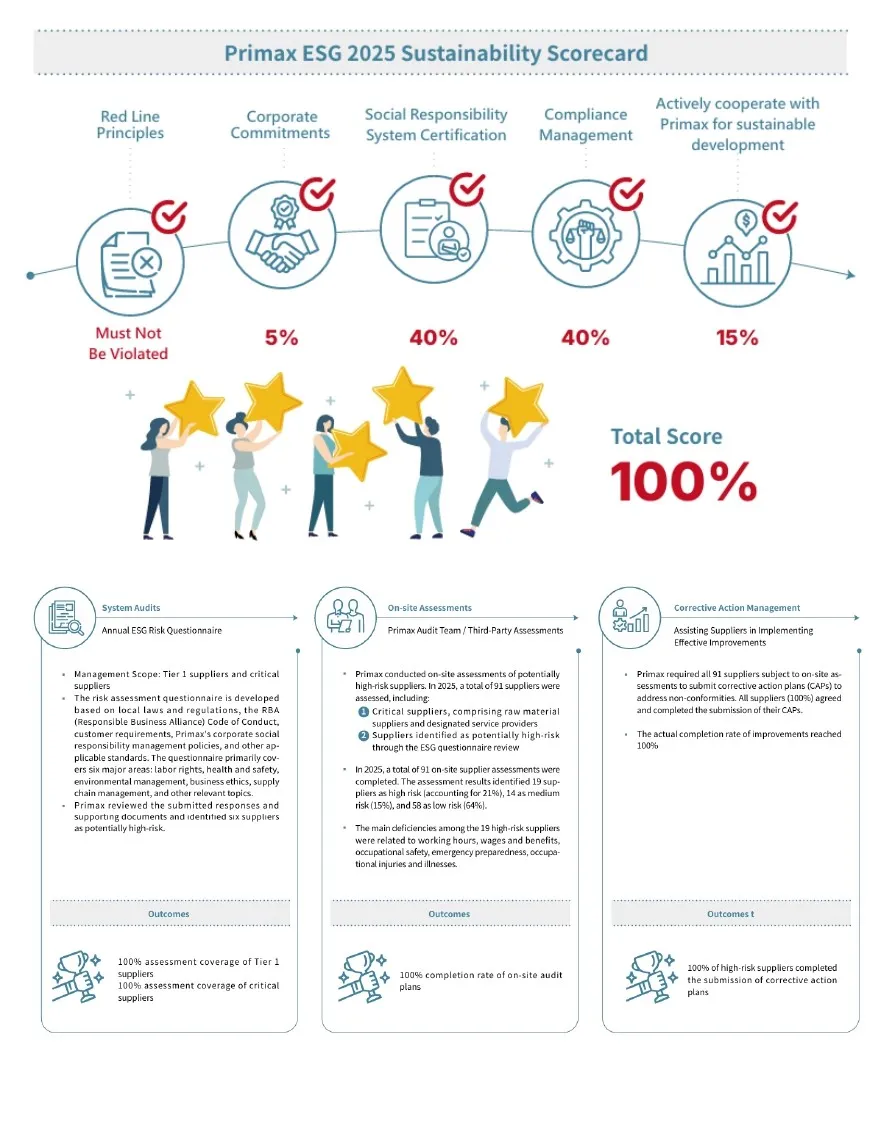
In addition, Primax also enhances transparency of supplier scoring results and rankings to foster healthy competition and experience exchange among suppliers. If a related risk event occurs within the supply chain, communication and management mechanisms will be initiated with the procurement team to require improvements within a specified time frame. Depending on the situation, measures such as eliminating suppliers, adjusting order percentages, or reducing the scope of cooperation may be taken to ensure supply chain stability and risk control. The focus areas and weighting of the sustainability scorecard are as follows:
According to observations of the 2024 evaluation results, the sustainability scorecard has demonstrated significant effectiveness in enhancing the sustainability management capabilities of critical suppliers. Based on this, Primax will continue to optimize the evaluation mechanism in 2025, and gradually raise the scoring standards annually according to industry development trends and management strategies, to drive suppliers towards higher levels of sustainable performance. In addition, for suppliers with outstanding performance or exemplary practices, Primax establishes ESG-related awards at the annual Supplier Conferences to publicly recognize and promote experience sharing, thereby fostering positive developments across the entire supply chain.
Improvement of Suppliers' Sustainability
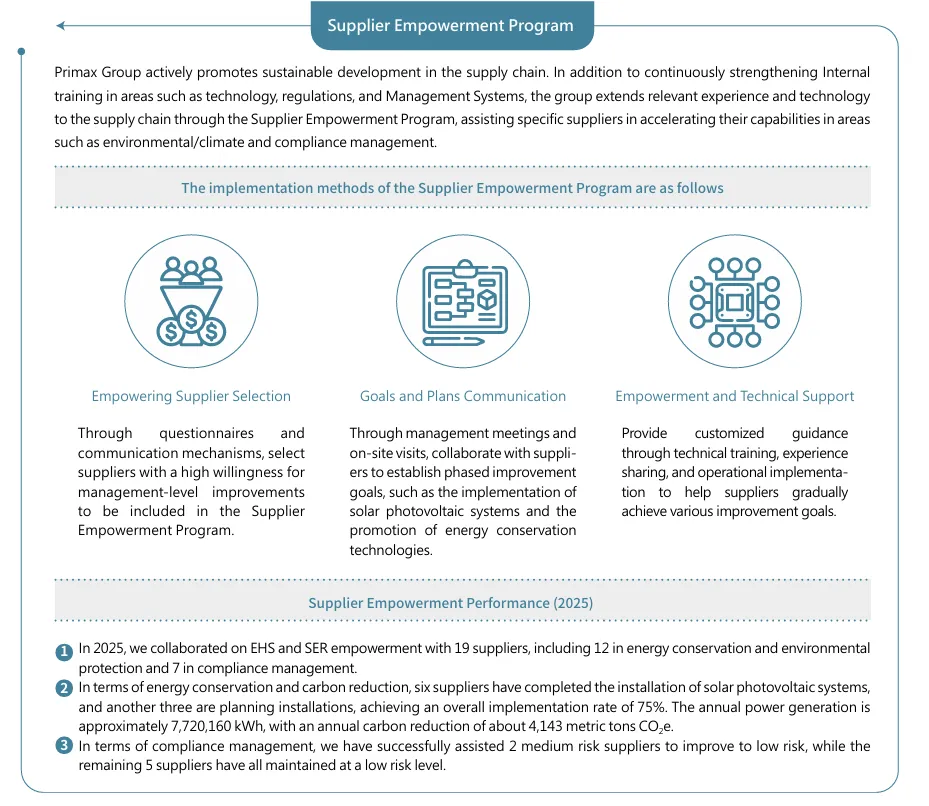
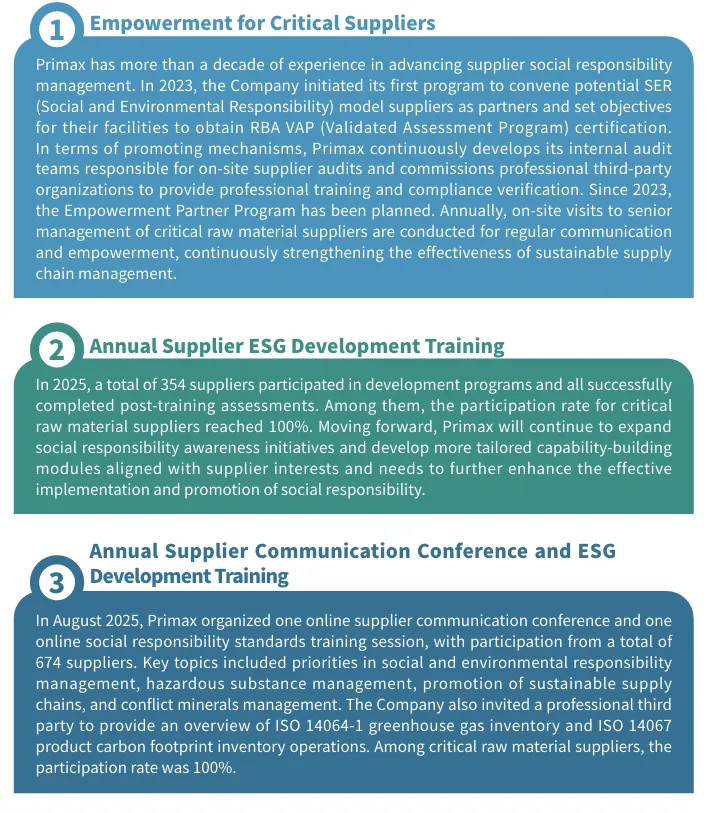
In the context of rapidly expanding and deepening sustainability issues, Primax has remained consistently engaged and proactive. Grounded in meeting the expectations of customers and investors, and dedicated to identifying shared sustainable solutions, the Company aims to maximize industry resources and benefits through alliances with industry partners, while supporting the United Nations SDG 17, Partnerships for the Goals. Primax's goal is to work hand in hand with supplier partners through the "TEACH ESG Supplier Collaboration Project." By convening suppliers around specific sustainability topics, the Company strives to create more opportunities and resources for learning, capability building, and advancement, fostering continuous progress together.