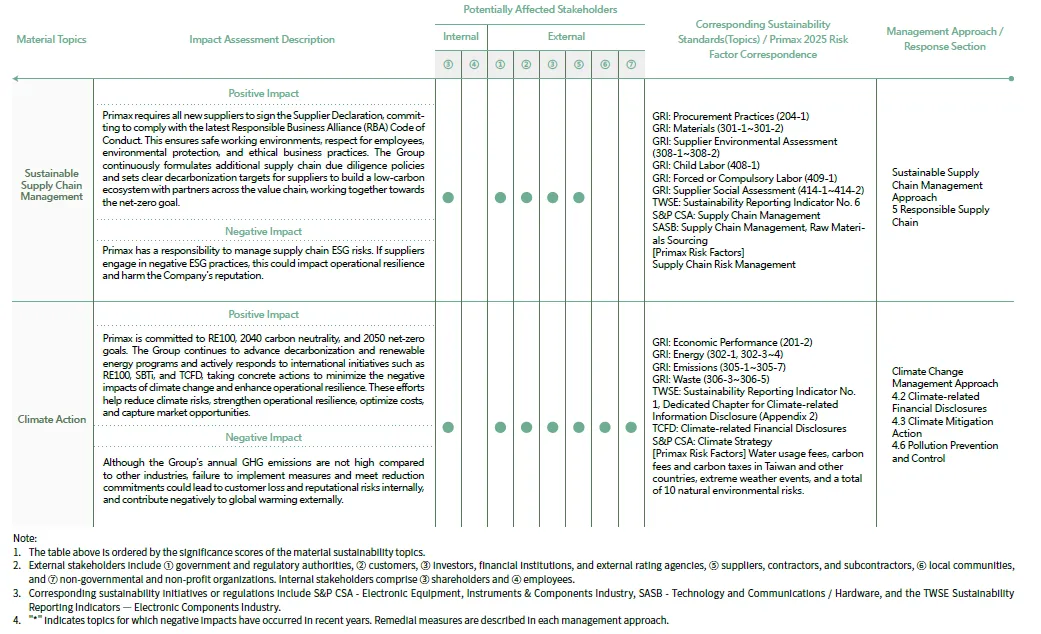

Stakeholder Identification
For the definition and selection of stakeholders, Primax has established a systematic identification mechanism. This process takes into account the relevance across the value chain, both upstream and downstream, as well as the extent of business interactions to map the major groups related to the Group's operational activities. In addition to following the five principles of dependency, responsibility, influence, diverse perspectives, and tension outlined in the AA1000 Stakeholder Engagement Standards (SES), the identification process also refers to the GRI Standards (2021) definition of stakeholders, assessing from the perspective of individuals or groups whose interests are or could be affected by the organization's economic activities. Through the aforementioned method, we can more effectively identify the individuals or groups who are actually or potentially affected in the Sustainability Management process. This analysis is reviewed and adjusted on a rolling basis annually to ensure alignment with operational development and changes in the external environment.
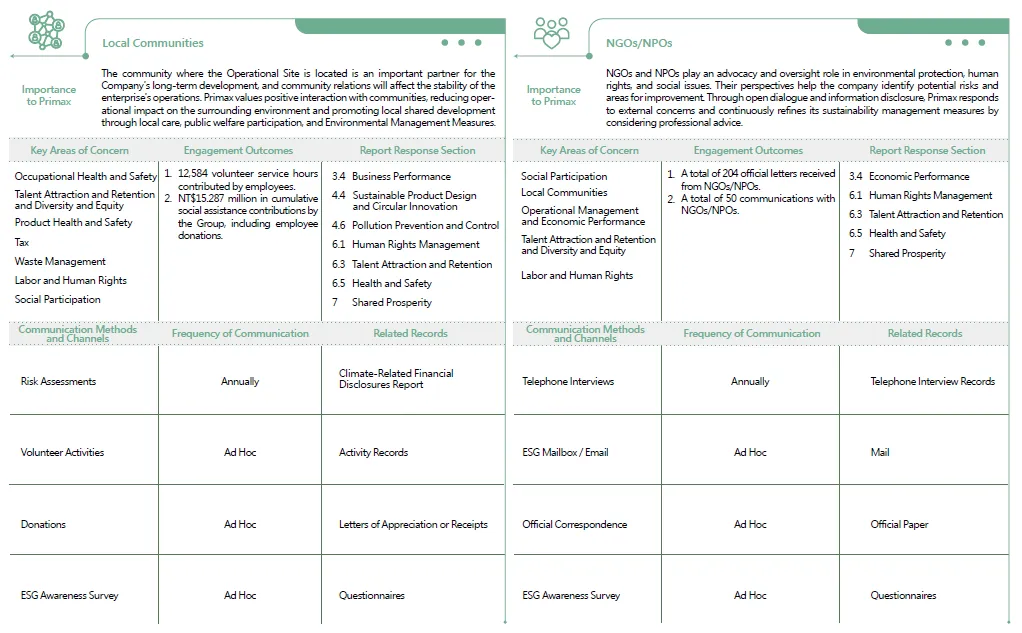
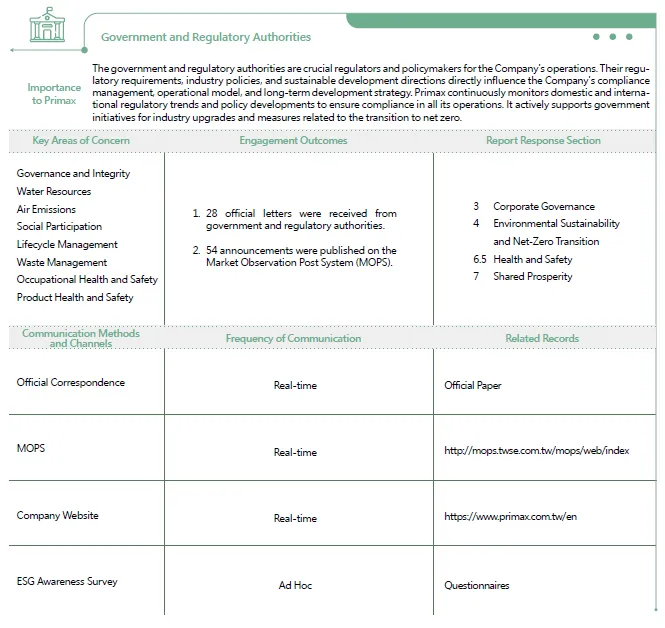
Following evaluation by the ESG Office during the year, Primax confirmed that the primary stakeholder groups remained consistent with the previous year. These groups comprise seven major categories: government and regulatory authorities; customers; shareholders, investors, financial institutions, and external rating agencies; employees; suppliers, contractors, and subcontractors; local communities; and nongovernmental and non-profit organizations. We continue to maintain effective communication and engagement with stakeholders, providing timely feedback on how the Company's business activities impact each group. Primax also takes appropriate improvement measures to foster relationships built on mutual trust, benefit, and value creation.
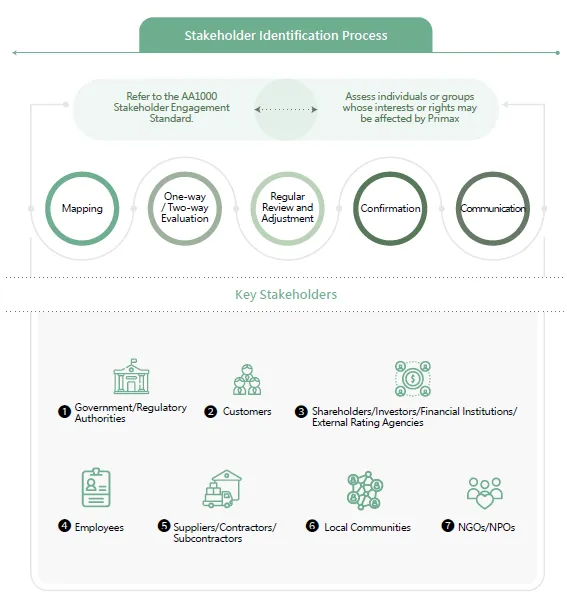
Stakeholder Communication and Response
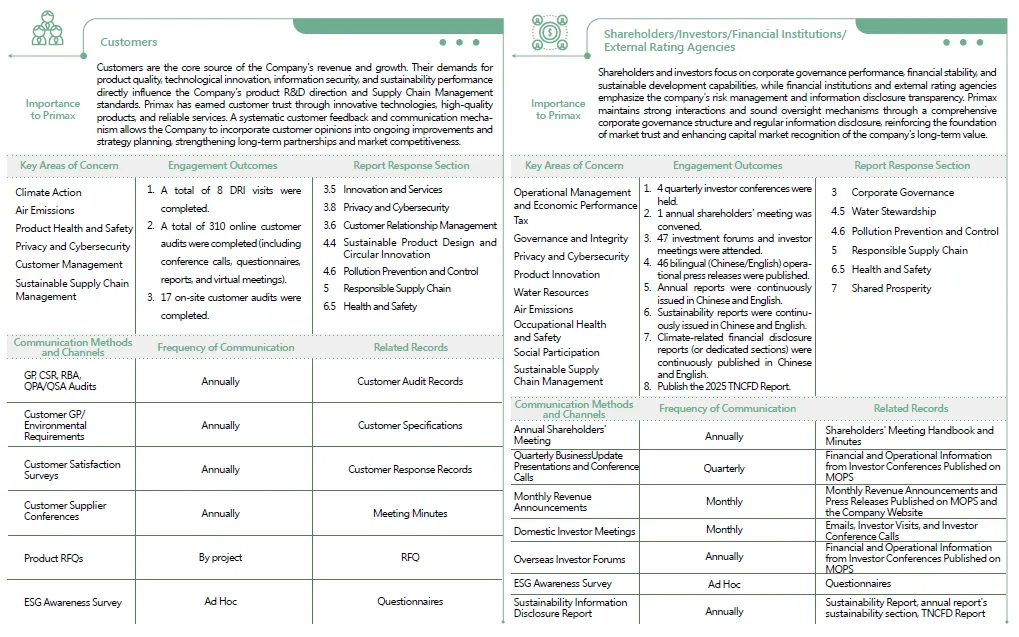
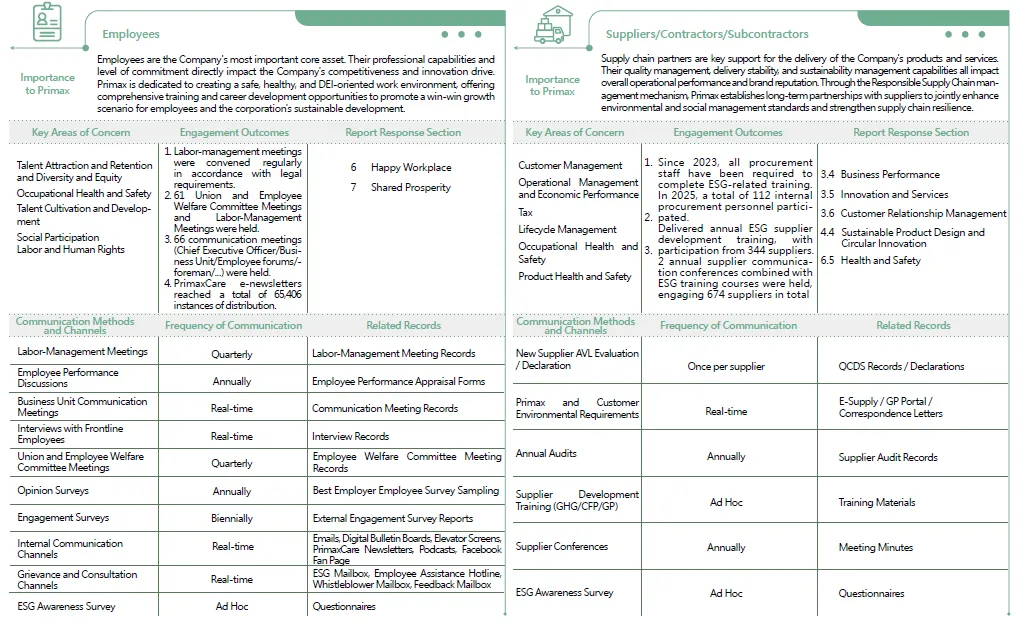
Primax Group values communication and engagement with stakeholders. Through diverse dialogue mechanisms, the Company gains a deep understanding of issues and expectations related to its business activities, using this insight to plan relevant sustainability strategies and action plans, continuously improving corporate sustainability performance. We are committed to building long-term, stable interactive relationships with all stakeholders by incorporating their concerns into the sustainability management framework and demonstrating accountability and commitments through transparent disclosure mechanisms.
Primax adopts diverse engagement approaches, including oneway information dissemination, two-way communication, one-to-many, and many-to-one interaction models, to ensure the comprehensive collection of and response to stakeholder opinions. The ESG Office collects stakeholder concerns from primary points of contact in each stakeholder group every six months and verifies whether any material impact events have occurred. After integrating and analyzing relevant information, it serves as an important basis for identifying Material Topics and conducting Risk Assessments, and is reported regularly to the Board of Directors to strengthen the governance oversight mechanism, ensuring alignment between corporate decisions and sustainability objectives.
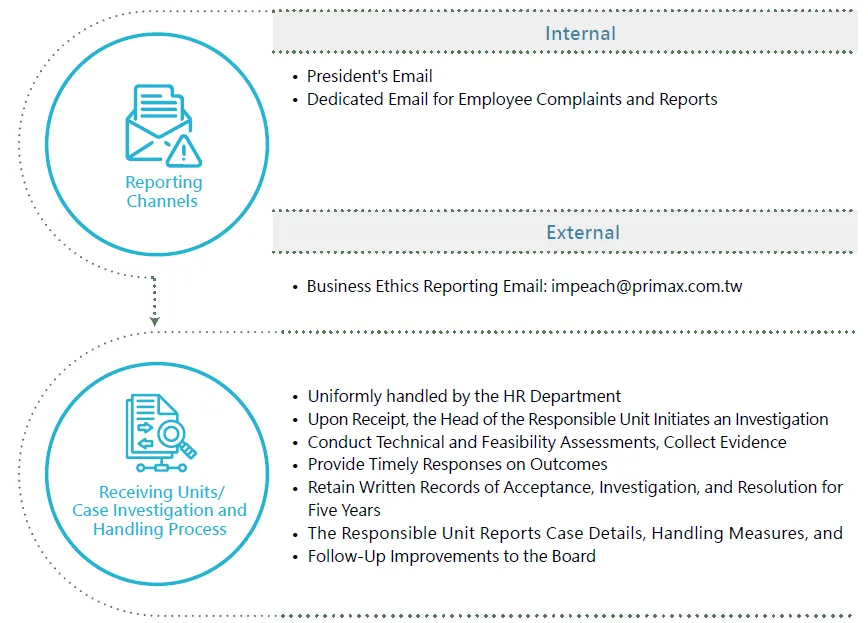
A convenient complaint and reporting channel
Primax has established the "Operational Procedures for Ethical Managementand Guidelines of Conduct," "Employee Communication and Feedback Management Measures," and "Employee Code of Conduct." We have also set up Business conduct complaint mailbox and reporting channels to facilitate communication and feedback from internal and external stakeholders. Externally, we have a dedicated ESG (Environmental, Social, and Governance)sustainable website section that includes an ESG mailbox as a communication channel with external stakeholders. This mailbox allows stakeholders to raise any questions, suggestions, complaints, reports of misconduct, or other relevant matters related to Primax Electronics. It is managed by the ESG Office, which is responsible for handling the received correspondence and messages, notifying relevant internal departments for evaluation and response, and maintaining openand constructive communication. In 2024, the ESG mailbox received a total of 232 messages, encompassing proposals for public welfare initiatives, product-related inquiries, research collaboration, and other forms of cooperation. Among these, two submissions involved complaints regarding business practices between suppliers and personal conduct by family members of employees. Following investigation, the Company provided responses and referred the matters to the appropriate departments for subsequent handling. Internally, we provide diverse employee communication channels. If any employee is unsure whether a situation violates applicable laws, regulations,binding policies, or company norms, they can seek advice and assistance from supervisors, human resources, or legal departments. While protecting employees' rights and interests, the Company also aims to sustain constructive labor relations through these channels. In 2024, no cases of employee complaints or reports concerning breaches of ethical conduct or integrity were recorded within the Primax Group.
Management of Material Topic
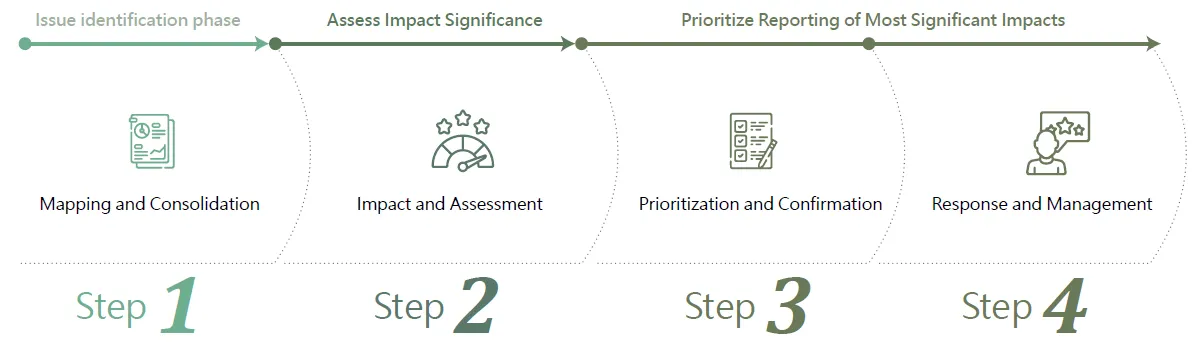
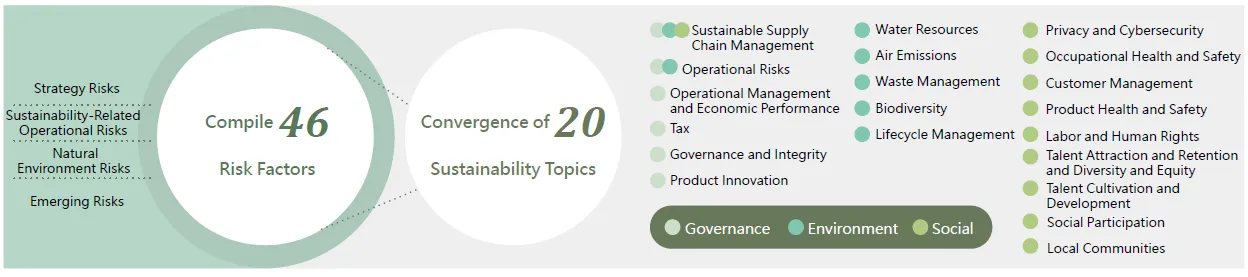
To enhance the consistency of sustainability topics management and risk assessments, Primax will integrate the process of identifying Material Topics into the Enterprise Risk Management evaluation mechanism in 2025. Through expanded mapping and integration of sustainability, climate, and nature-related issues associated with business activities, a comprehensive list of risk factors has been established. A scenario analysis framework and assessment logic are adopted to conduct the risk and opportunity analysis. Subsequently, major determinations and analyses are conducted according
to the normative requirements of each disclosure guideline, ensuring consistency and comparability in the sources of factors, scenario settings, and assessment basis, while also considering the disclosure priorities of different guidelines.
Through the integrated assessment process, the group's control over risks and opportunities is enhanced, which in turn supports the development of management approaches for material topics to effectively prevent or mitigate negative impacts and proactively create positive value. On this integrated basis, the process for identifying Material Topics for this Year is described as follows.
Step 1 Mapping and Consolidation
Firstly, in the issue identification phase, based on the mapped list of risk factors, after alignment and consolidation, 20 sustainability topics were ultimately identified, which serve as the basis for subsequent materiality determination and analysis.
Step 2 Impact and Assessment
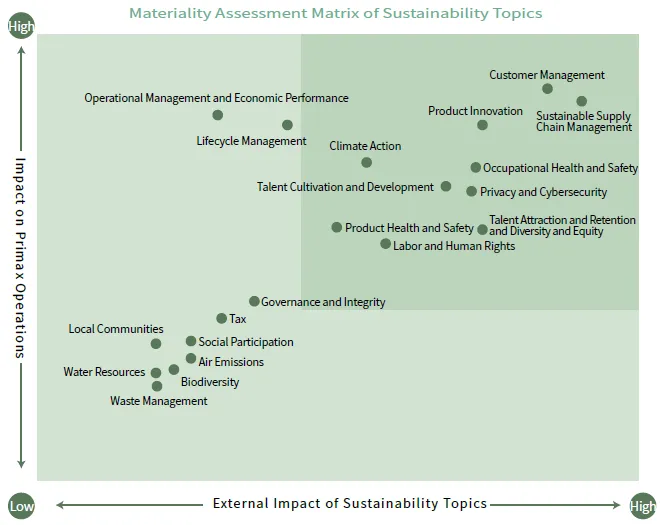
During the stage of assessing the significance of impacts, the process follows the materiality disclosure principles set forth in the latest version of "GRI 3: Material Topics 2021." The ESG Office and senior management from various departments evaluate the "actual and potential impacts" of operational activities on different risk factors, considering their severity and likelihood within the actual management context of Primax Group. The evaluation also incorporates the concept of Double Materiality from the EU and the spirit of IFRS Sustainability Disclosure Standards issued by the IFRS Foundation. It conducts a comprehensive assessment and ranking based on the impacts of the company’s operations on economic, environmental, and social dimensions, as well as the potential impacts of related issues on the company’s financial performance and corporate value, ensuring objectivity and comparability of the assessment results.
Step 3 Prioritization and Confirmation
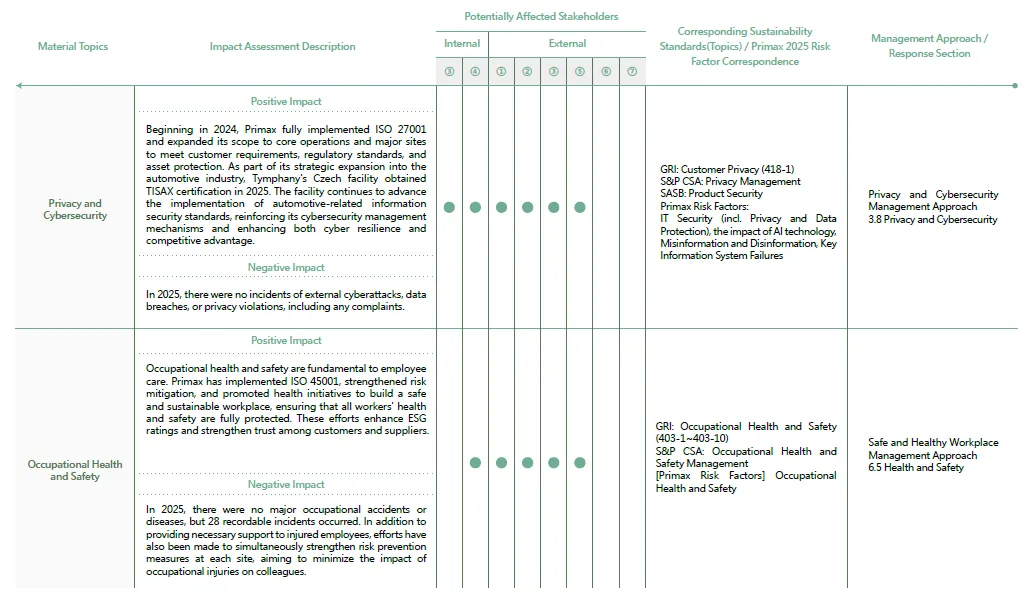
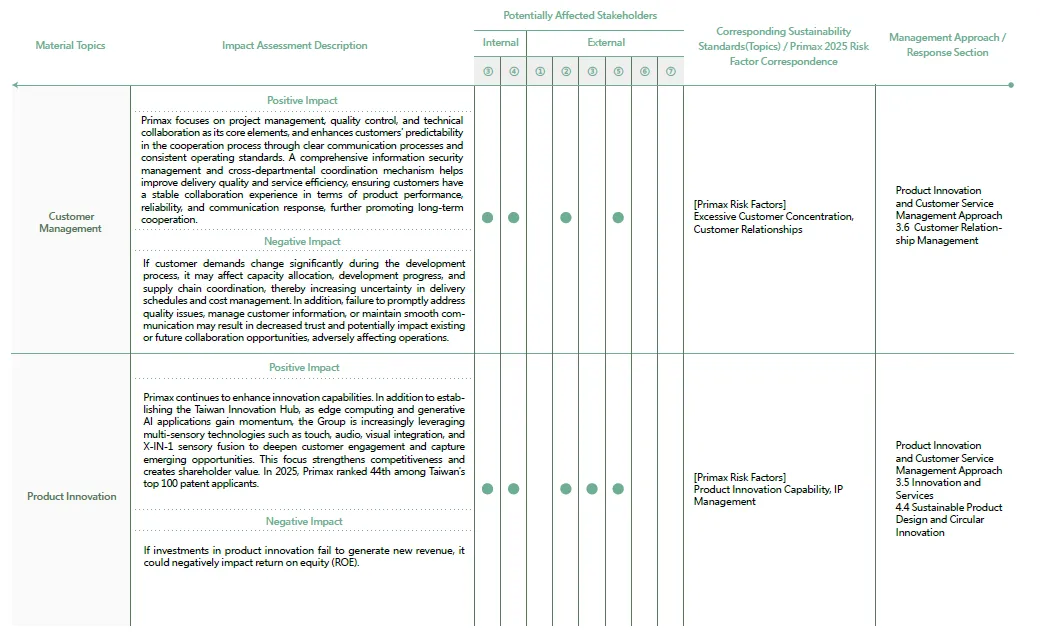
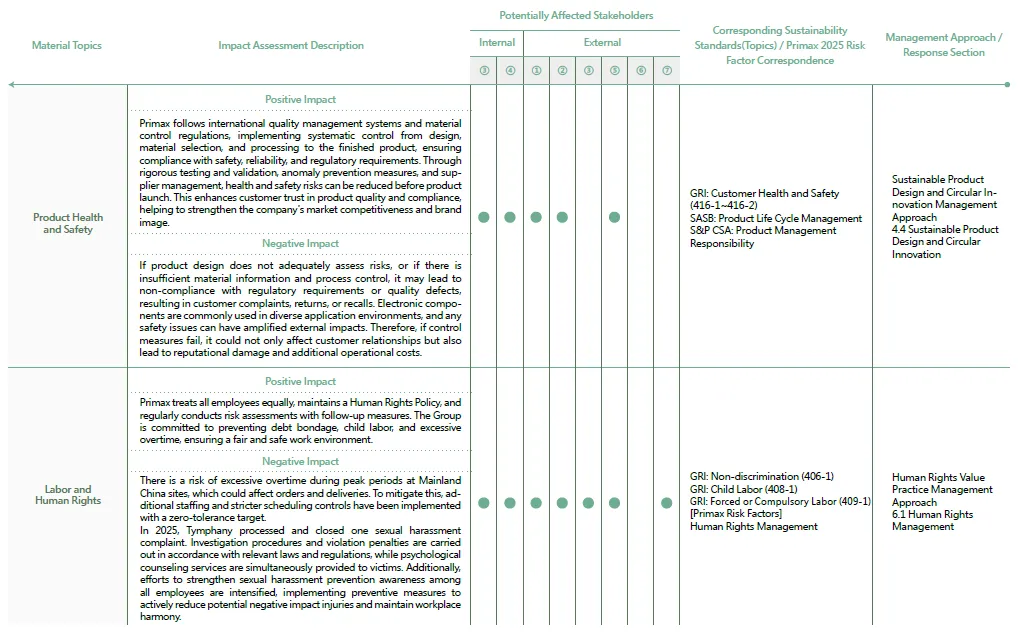
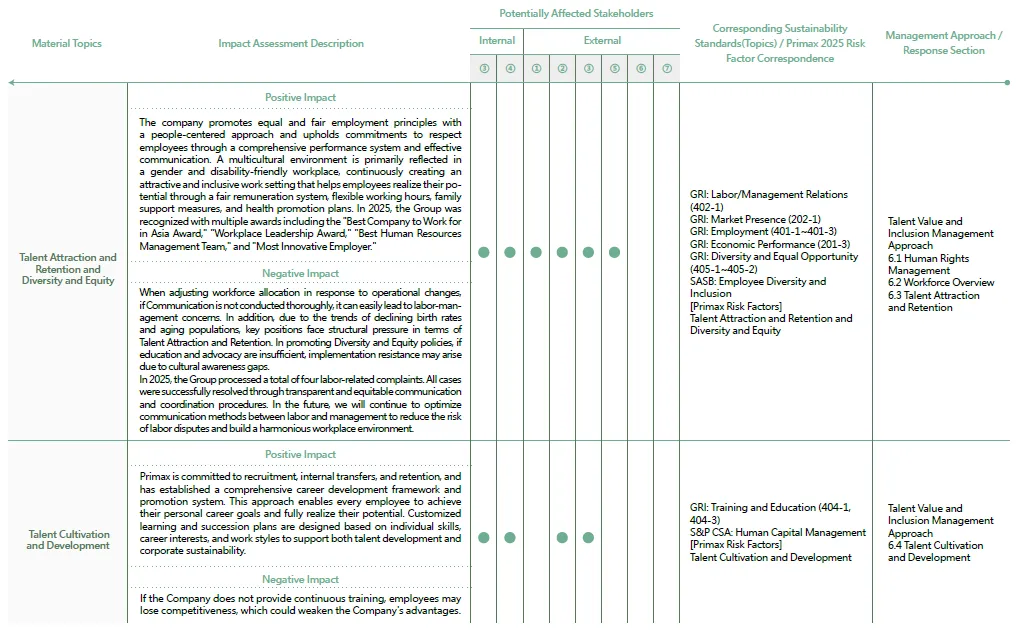
Based on the assessment results of risk factors, further calculate the extent of positive and negative impacts of each sustainability topic. Based on the materiality threshold, stakeholder priorities, and recommendations from external experts and consultants, the ESG Office ultimately selected 10 sustainability topics as the material topics for the year. These are: Privacy and Cybersecurity,
Occupational Health and Safety, Customer Management, Product Innovation, Product Health and Safety, Labor Rights, Talent Attraction and Retention and Diversity and Equity, Talent Cultivation and Development, Sustainable Supply Chain Management, and Climate Action.
Step 4 Response and Management
The 10 selected material topics were approved by Vice President Chiang, Yan-Ying, Chair of the ESG Office, and subsequently submitted to the Sustainability and Risk Management Committee and the Board of Directors for approval in August 2026. The confirmed Material Topics will serve as the core disclosures and management focus of this report, and will be incorporated into the company's sustainability goal setting, performance management, and information disclosure planning to strengthen the implementation of strategy linkage and management. Descriptions of the positive and negative impacts of each material sustainability topic are provided in the table below. For details on management approaches, please refer to the relevant sections of this report.