

Life cycle assessment and product green design

Product Life Cycle
To reduce the environmental impact of its products, Primax evaluates the environmental impacts at each stage of the product life cycle in accordance with international standards ISO 14040 and ISO 14044 and incorporates green design principles. Since 2013, Primax has conducted product carbon footprint studies using the life cycle assessment methodology based on ISO 14067, selecting representative products for evaluation. Given the Group's extensive product portfolio, Primax has adopted a phased strategy to complete carbon footprint calculations across product categories.
The Group continues to deepen the application of the Carbon Value Management System, using product carbon footprint assessments as the core foundation for promoting low-carbon design. In 2025, we continued to expand the assessment scope and completed life cycle assessments (LCA) for 18 major products. The scope covered a diverse range of items including mice and keyboards (wired, wireless, and gaming), keyboard modules, wireless charging products, game controllers, docking stations, surveillance cameras, body-worn cameras, multifunction printers, thermal printers, Bluetooth speakers, soundbars, and professional audio equipment. The assessment scope's revenue coverage significantly increased from 51% last year to 70%.
Through detailed data analysis of stages including raw materials, manufacturing, product energy consumption, transportation, and waste treatment, we can more accurately identify carbon reduction hotspots. To further enhance decision-making efficiency at the R&D end, the company plans to complete the development of a real-time carbon footprint reporting system for all mass-produced products by 2026. Through automated data integration, this will provide real-time support for the design units in the analysis and optimization during the ecodesign and low-carbon design phases, fulfilling the commitments to reduce carbon emissions throughout the product's entire life cycle.
Continuously Reducing Product Environmental Impacts
As a company primarily engaged in contract manufacturing and assembly, Primax is committed to ensuring that every stage of the product life cycle, from upstream product design to end-of-life treatment, moves toward greener and more circular practices while meeting customer requirements. In 2025, we continued to increase the proportion of recycled plastics used in raw materials. In the production and manufacturing stage, product design improvements and advances in production techniques helped reduce labor hours. At the end-of-life phase, we adhered to WEEE compliance principles and monitored the disassembly rates of Primax products.
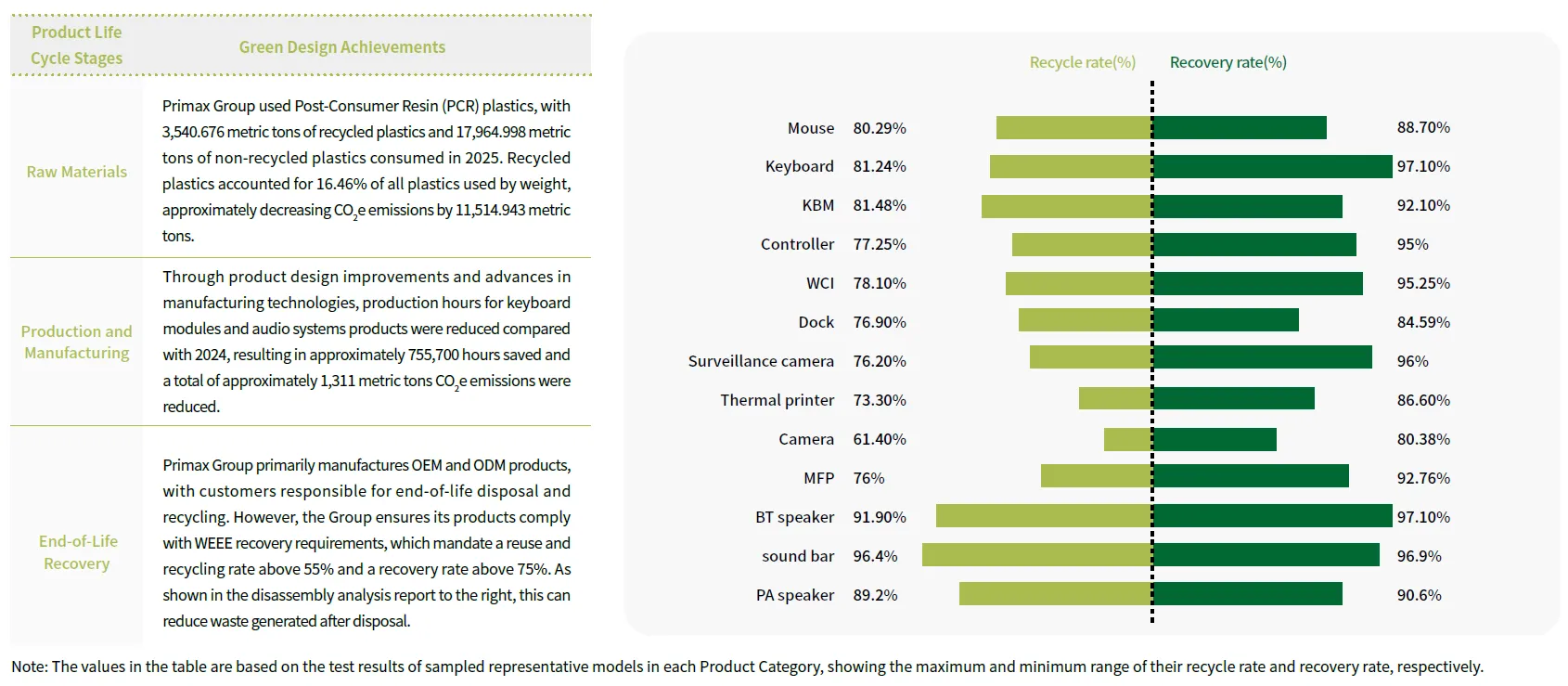
Eco-Design
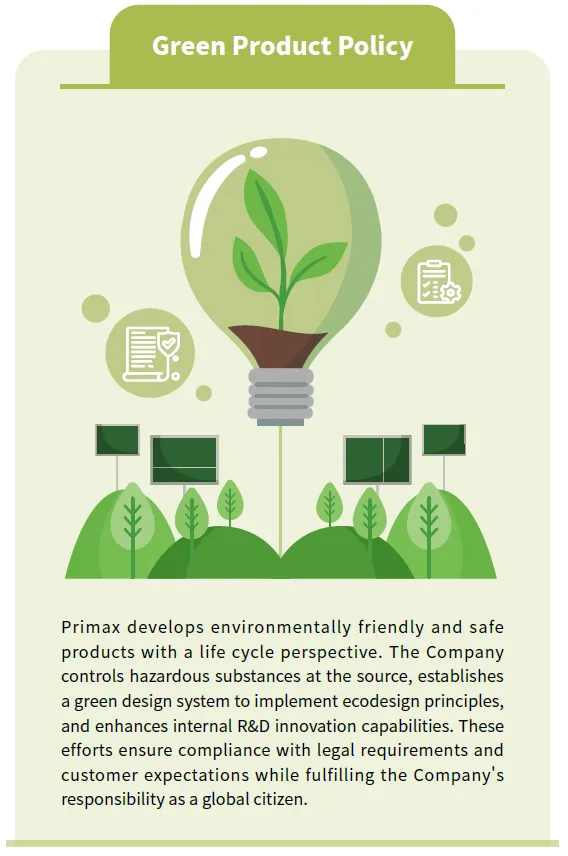
All high-quality electronic products manufactured by Primax Group undergo life cycle assessments covering each stage, including raw material procurement, manufacturing, transportation, product use, and end-of-life disposal, to reduce their environmental impact. Primax has integrated various information systems and design management procedures to establish an ecodesign management system and carbon emission factor database. The system combines ISO 14040/14044 and the individual product standards of ISO 14021 with existing information management platforms such as PLM, SAP, and the GP Portal, building a comprehensive green product management framework. During product development, requirements related to ecodesign, such as regulations, customer standards, eco-labels, and product specifications, are clearly identified. The approach encourages the integration of diverse considerations into design processes, including advanced hazardous substance control beyond regulatory requirements, packaging materials, recyclability, and the use of recycled materials, to deliver products with low carbon footprints, non-toxicity, and minimal environmental impact.
In 2022, Primax established the Ecodesign Committee, comprising senior R&D leaders from each organization. The committee is responsible for coordinating ecodesign and low-carbon design planning and systematically advancing related initiatives to address the transitional challenges of reducing product carbon footprints. Through regular discussions led by the Ecodesign Committee, Primax Group's Chief Technology Officer and the ESG Office guided R&D leaders from various business units to explore green product design trends and opportunities to launch internal eco-design projects. They continuously promote the development of various low-carbon product projects for Primax Group to meet customer expectations and the organization's long-term net-zero goals.
Green Product Design
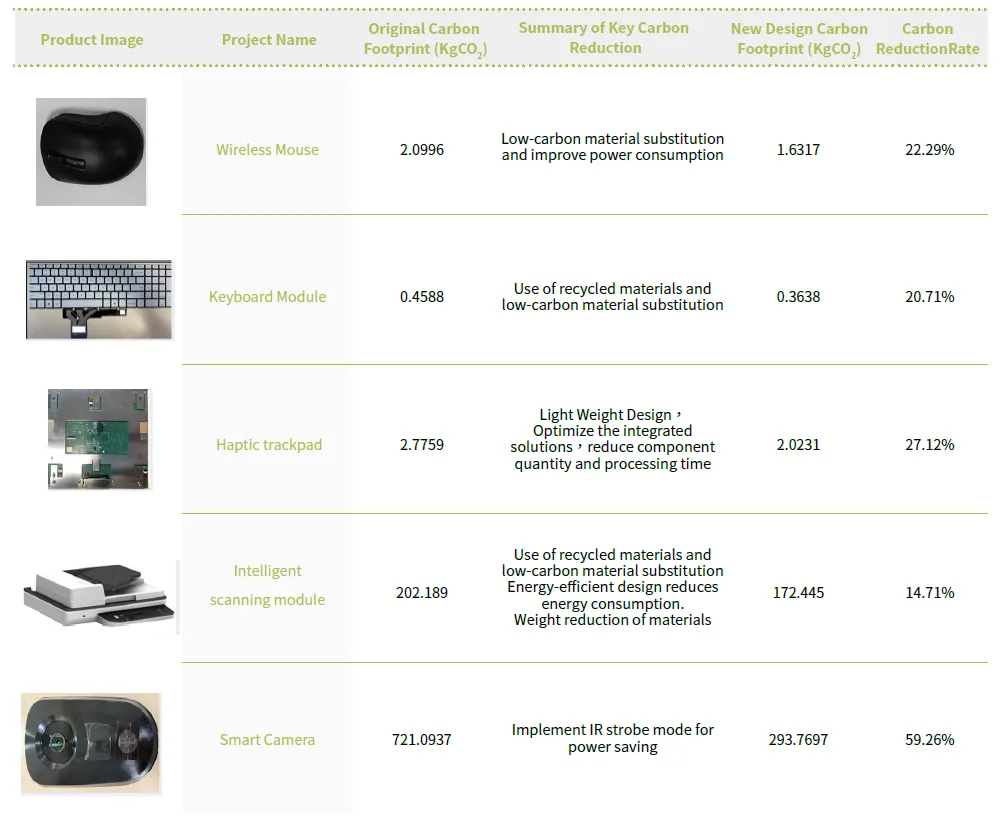
Primax Group continues to strengthen its foundational capabilities in ecodesign and low-carbon design and has developed a product carbon footprint information system to compile baseline data for product carbon footprints. In 2024, Primax officially launched low-carbon design projects for major products, incorporating this into the performance management and reward mechanisms for R&D leadership, thereby enhancing the effectiveness of promoting lowcarbon product design projects and reducing the carbon emission impact over the Product Life Cycle.
In 2025, resources invested in green product design totaled NT$69.46 million, including investments in personnel resources, project expenses, dedicated equipment, carbon footprint management system development, and training.
Green Product Health and Safety Management
Primax Group strictly adheres to local environmental protection regulations in all countries of operation and to customer requirements for restricted and prohibited substances. Comprehensive controls are applied at every stage, including design, procurement, manufacturing, and production. The Group is committed to fully safeguarding customer health and safety and advancing toward the long-term goal of zero environmental pollution.
Monitoring Chemical Regulatory Trends
Primax Group operates production sites across multiple regions. Accordingly, we closely monitor chemical-related regulations in each location, including but not limited to the European Union Restriction of Hazardous Substances in Electrical and Electronic Equipment Directive (RoHS), Registration, Evaluation, Authorization and Restriction of Chemicals (REACH), Persistent Organic Pollutants Regulation (POP), the Environmental Protection Agency Toxic Substances Control Act (TSCA), California Proposition 65, Limits for Volatile Organic Compounds Content in Cleaning Agents, Limits for Volatile Organic Compounds Content in Adhesives, and other international standards and Chinese national regulations.
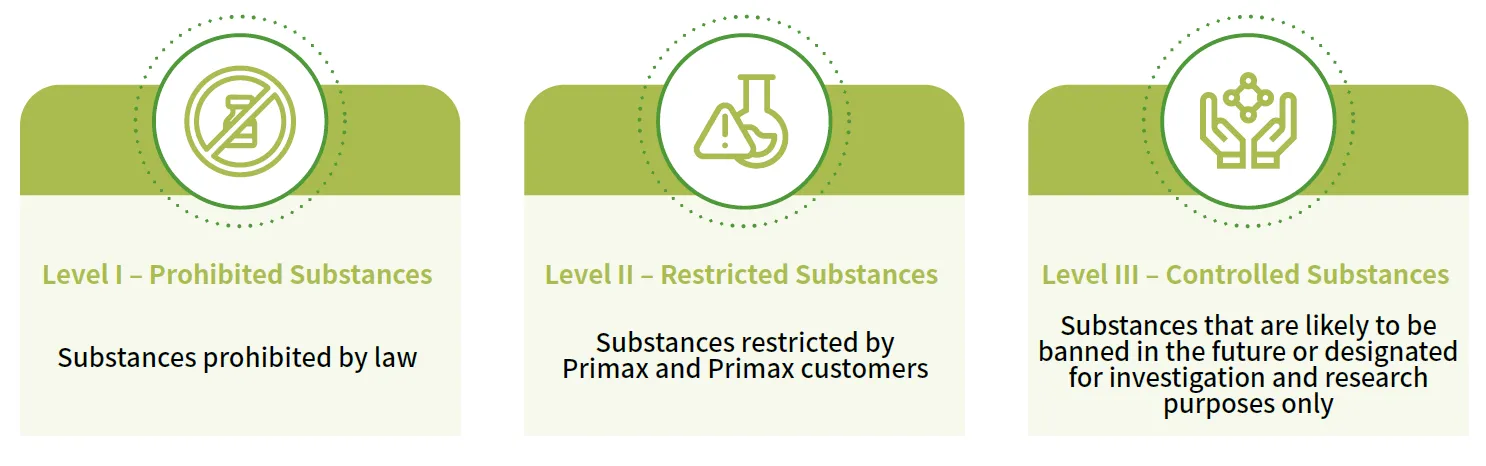
In line with applicable regional regulations and customer requirements, Primax Group has established the Primax Green Product Chemical Substance Restriction Specification. At present, there are a total of 69 prohibited substances and 19 restricted substances. Through coordinated oversight by multiple departments, including Environmental Health and Safety, Production, Green Product, and Product R&D, the use of products is managed at different stages.
Primax Group Green Product Management Platform
To implement effective source control, Primax utilizes a Product Data Management (PDM) system as its core platform, integrating GP Portal®, SAP®, and other information systems to build a comprehensive management infrastructure. This approach effectively reduces operational costs and improves processing efficiency. It also consolidates customer regulatory requirements, design processes, supplier management, procurement, production, and training into unified workflows, ensuring strict compliance and effective execution at every stage. Suppliers must guarantee that all products sold to the Group, including their raw materials, dyes, solvents, consumables, packaging, and processes, do not contain or use any hazardous substances prohibited by the laws of the countries where the products are marketed. All products must also comply with the requirements set forth in the Primax Group Green Product Chemical Substance Restriction Specification.
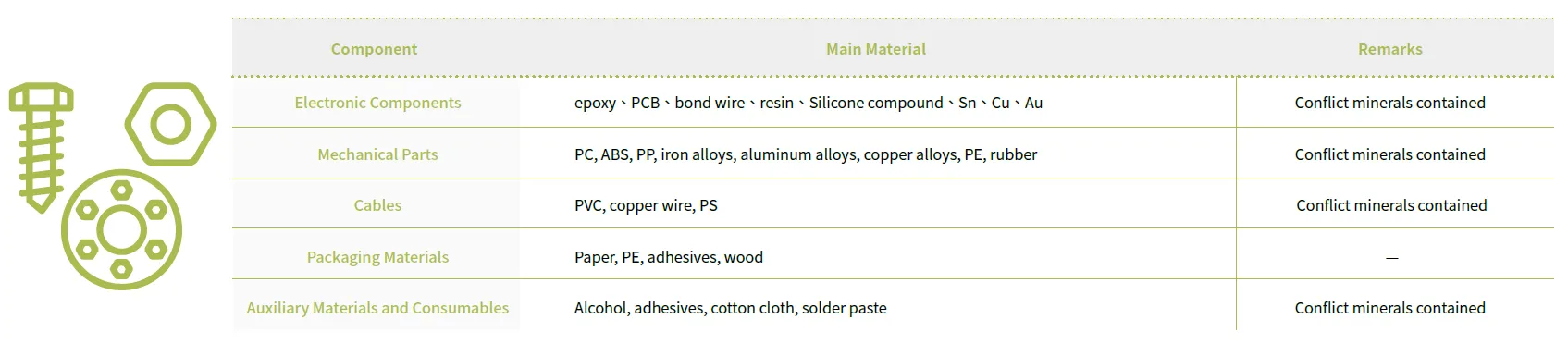
Full Material Disclosure (FMD)
Primax Group integrates its PDM®, GP Portal®, and SAP® management systems to identify the material composition of all components. Suppliers are required to upload and regularly update the complete raw material content of their components into the GP Portal, enabling Primax to assess the potential impacts of these parts on health and the environment. The Group has also incorporated all controlled substances listed in IEC 62474 into the GP Portal database. This allows clear tracking of whether materials provided by suppliers contain any substances regulated under IEC 62474, thereby ensuring compliance and enabling traceability of upstream chemical usage.
In response to customer requirements, Primax discloses information on hazardous substances, including 100% product health and safety assessments, declarations of conformity, hazardous substance test reports, material safety data sheets, and safety/ EMC compliance reports. In 2025, there were no incidents of non-compliance with health and safety regulations or voluntary codes related to products and services, and no record of fines or sanctions. Revenue generated from products subject to regulations governing hazardous substances accounted for 0% of the Primax Group's total revenue.
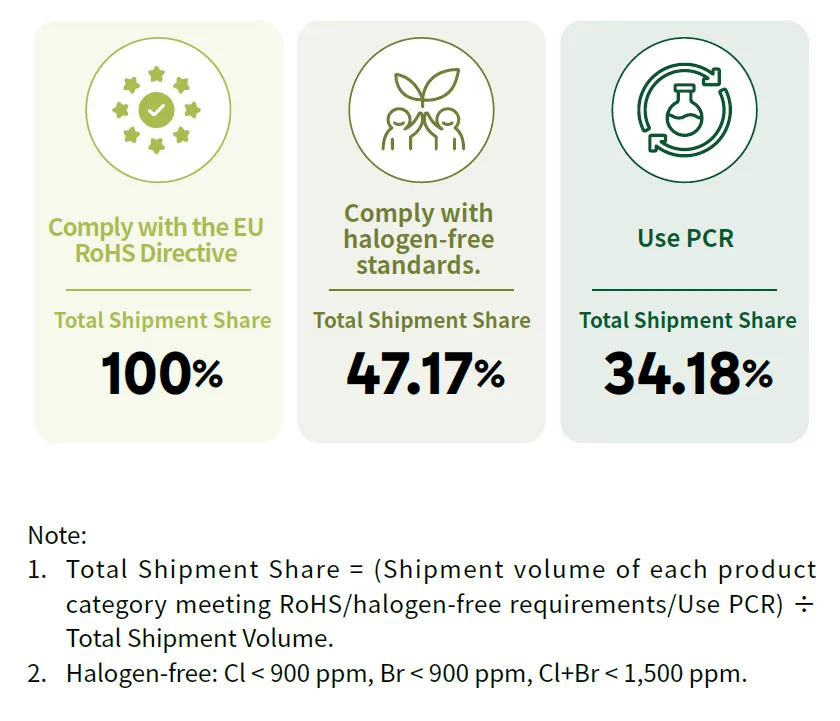
IECQ QC 080000 Hazardous Substance Process Management System Certification
Primax Group adheres to the Electrical and Electronic Components and Products Hazardous Substance Process Management System Requirements (IECQ HSPM QC080000), developed by the International Electrotechnical Commission. All production sites and R&D centers have obtained third-party certification and implement the management of hazardous substances in products accordingly. This management is rigorously carried out across all stages, including regulatory and customer requirements, part approval, supplier management, incoming material inspection, production and manufacturing, inventory control, finished product shipment, and relevant training.
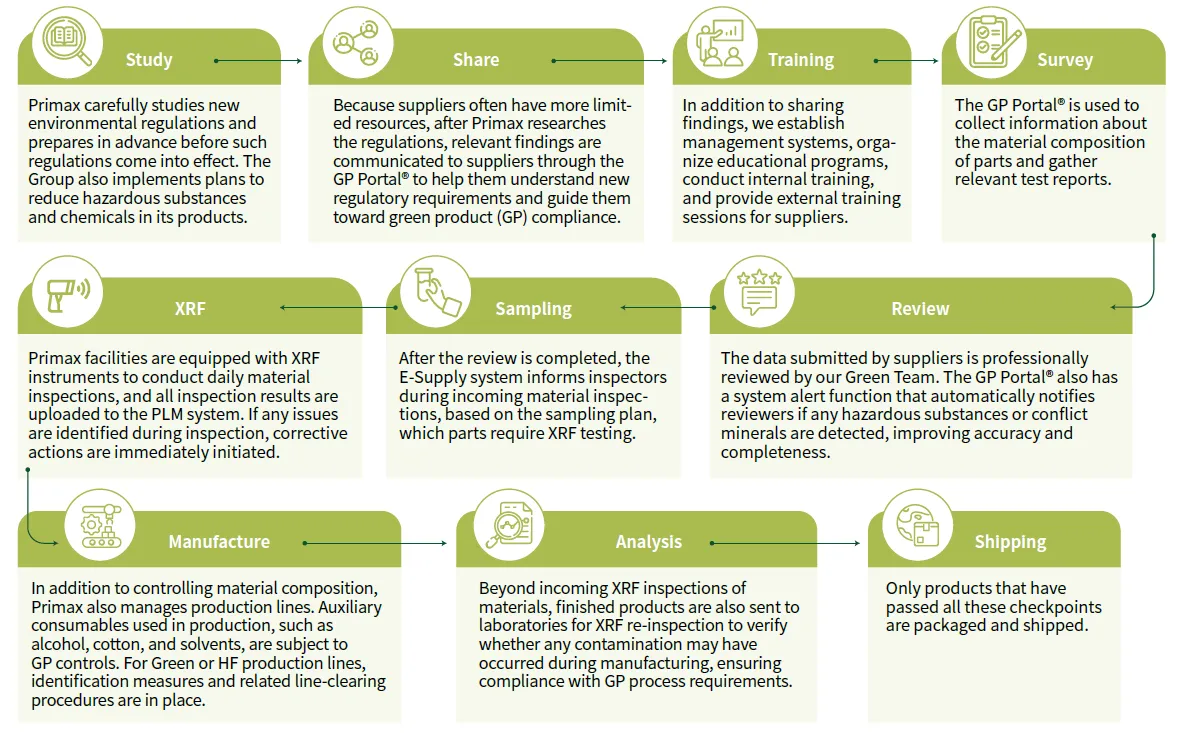
Hazardous Substance Phase-Out Achievements and Plans
In 2023, Primax included the nine chemical substances identified as priority chemicals under the RBA Industry Focus Process Chemicals Policy in its chemical inventory management program and fully prohibited their use by the end of 2023. Currently, all raw materials and auxiliary materials used by the Group comply with the relevant requirements.
In 2024, the Group will initiate an investigation into per- and polyfluoroalkyl substances (PFAS) and progressively reduce the use of non-polymeric PFAS, aiming for completion by 2026. By the end of 2025, the proportion of item numbers containing PFAS accounted for 1.95%, all in compliance with legal requirements. Additionally, to reduce VOCs emissions, for processes where the use of adhesives is unavoidable, Primax will continuously implement design optimization solutions to proactively reduce the use of high-volatility adhesives.
Raw material consumption statistics
The raw materials primarily used by Primax Group encompass categories such as metallic materials, non-metallic materials, electronic materials, and packaging materials. Metallic materials include iron, aluminum, copper, and other metals. In 2025, Primax Group's total raw material consumption amounted to 74,639 metric tons, representing an 5.29% decrease compared to 2024.
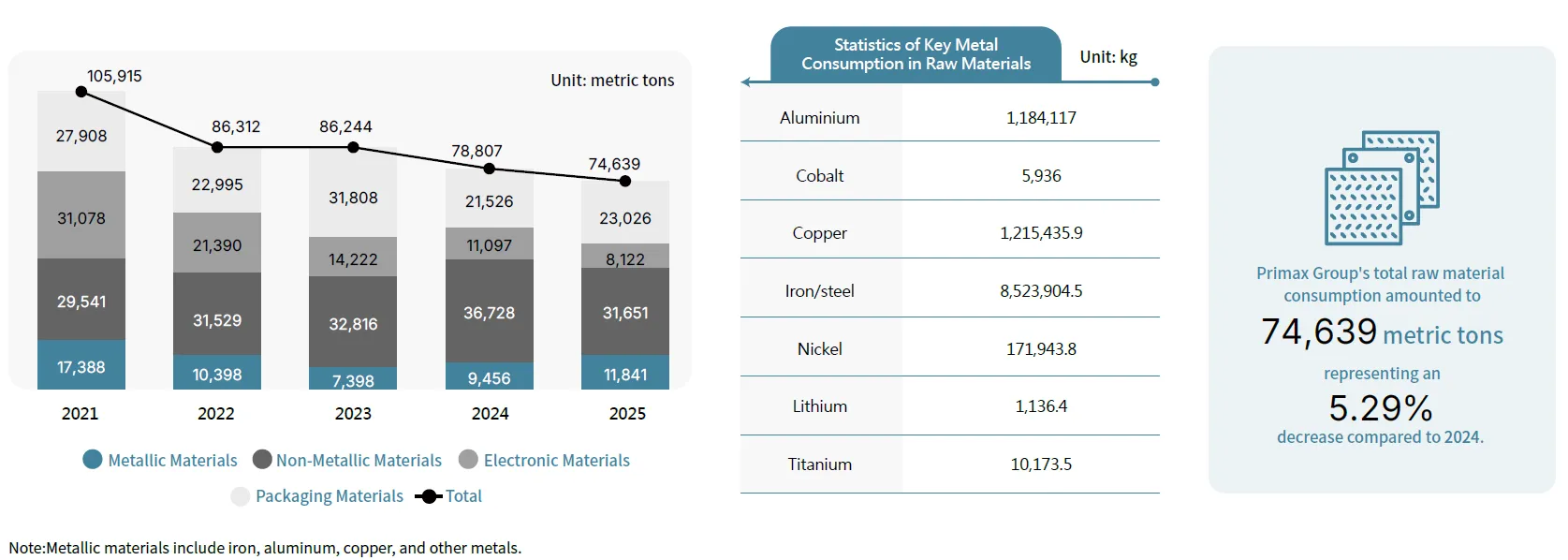
Table of raw material consumption (Unit:kg)
| Name of material | 2021 | 2022 | 2023 | 2024 | 2025 |
|---|---|---|---|---|---|
| Metal-Iron | 6,859,658 | 5,878,439 | 4,374,819 | 3,679,718 | 8,523,905 |
| Metal-Aluminum | 1,474,652 | 1,148,222 | 443,908 | 613,783 | 1,184,117 |
| Metal-Copper | 108,236 | 52,687 | 468,17 | 812,404 | 1,215,436 |
| Other Metals | 8,945,821 | 3,318,201 | 2,110,6708 | 73,700,605 | 189,190 |
| Non-metal Materials | 29,540,908 | 31,528,743 | 32,816,380 | 36,727,843 | 31,650,791 |
| Electronic Materials | 31,078,493 | 21,390,279 | 14,221,588 | 11,097,478 | 8,121,681 |
| Packaging Materials | 27,907,680 | 22,995,035 | 31,808,220 | 21,525,572 | 23,025,806 |
| Total | 105,915,448 | 86,311,606 | 86,243,763 | 78,806,510 | 73,910,926 |